OUR STORY
1790
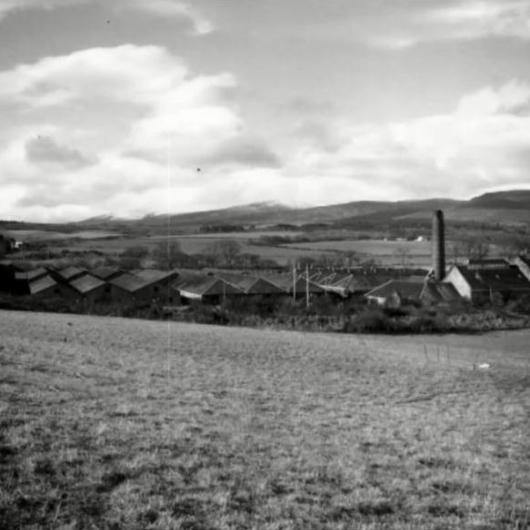
Our name. And our people’s names.
John Ross founded our distillery in 1790. Four people with the same surname work here to this day. (This is Ross-shire, after all.)
Balblair has two meanings in Gaelic: ‘the fertile plain’ and ‘battlefield’. We like to think we’re named after the former.
1894
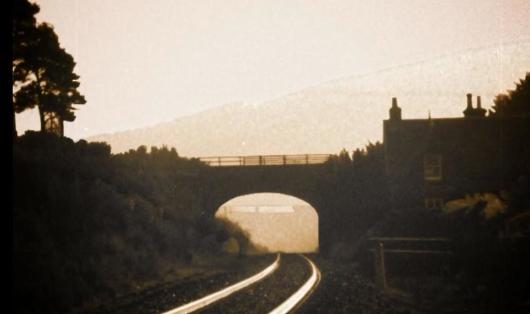
The distillery followed the train
When the Highland Railway reached Edderton, we moved half a mile north to meet the line – stills, warehouses, walls and all. The railway brought coal and barley in, and shared our whisky with the wider world.
Our buildings remain just as they did: sandstone, low to the ground, a red chimney, a pagoda, a courtyard.
1939
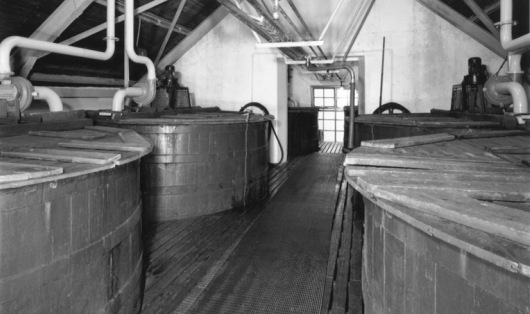
Balblair worked while the stills slept
The stills stood cold during the war; Edderton did not. British soldiers billeted here left chalk scribbles on our wooden joists; their notes remain to this day.
1947
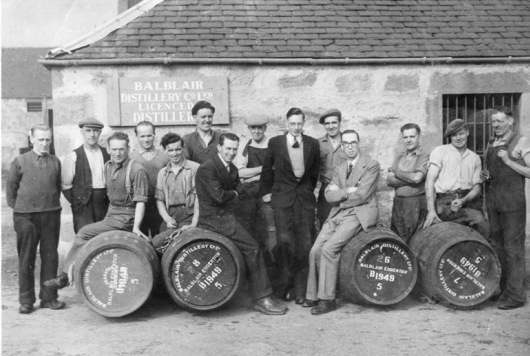
Brought back
Robert Cummings bought Balblair for £47,000 (just over £2 million in today’s money) – along with our sister distillery Old Pulteney. He reopened both at the same time.
Every so often, a relative of Robert’s arrives with an item for the Balblair archive. So far, we have photographs, letters, and a menu from the reopening dinner.
2007
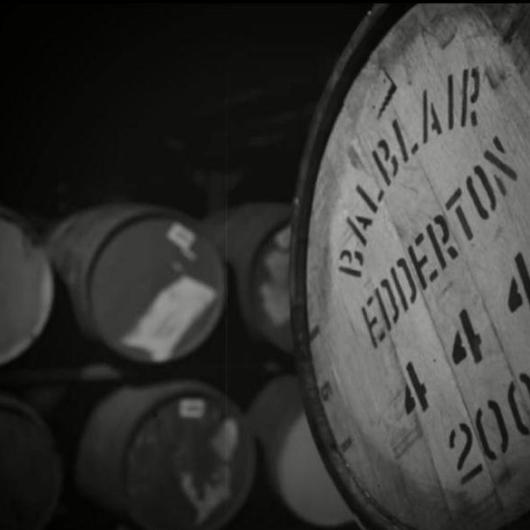
The year, not the age
For strictly limited time, we named a selection of our bottles after the year in which they were distilled: a 1990 vintage, a 2003.
2011

Answering our casting call
For his 2012 film Angels’ Share, Ken Loach imagined the perfect Highland distillery. He finally found it here, at the foot of Struie Hill, overlooking the Dornoch Firth.
Our team are up on screen too – but stardom didn’t go to their heads. You can watch them stirring the mash, watching the cut, rolling the casks.
Now

The same few hands
Since 1790, fewer than 160 people have made Balblair.
Today, six of us tend the stills.
What we do here is lived rather than learned. Our work informed by the knowledge that we’re only looking after the place, just like those who came before us.
Only the pleasure.